
If you live with a cat, you already know the truth: the litter box is never just a litter box. It is a daily negotiation between smell, mess, cleaning effort, and whether your cat decides to act offended by your purchase. The right setup can make life easier, while the wrong one can turn a simple chore into an ongoing complaint session at home.
That is why this comparison matters. Instead of buying whatever looks neat online, it helps to look at what each type actually does in real life. Some boxes are easier to clean, some control odour better, and some are simply more acceptable to picky cats. If you want a no-nonsense answer, this is the kind of product where practicality beats hype every time.
Why litter box choice matters
A good litter box should solve problems, not create new ones. It should contain mess, be easy to clean, and keep your cat comfortable enough to use it consistently. If your cat avoids it, scratches litter everywhere, or drags smell through the house, the design is probably working against you.
For affiliate readers, this is a strong topic because it solves a real pain point. People do not search for litter boxes because they are fun. They search because they want less smell, less cleanup, and less drama from their cat.
The 3 litter box types compared
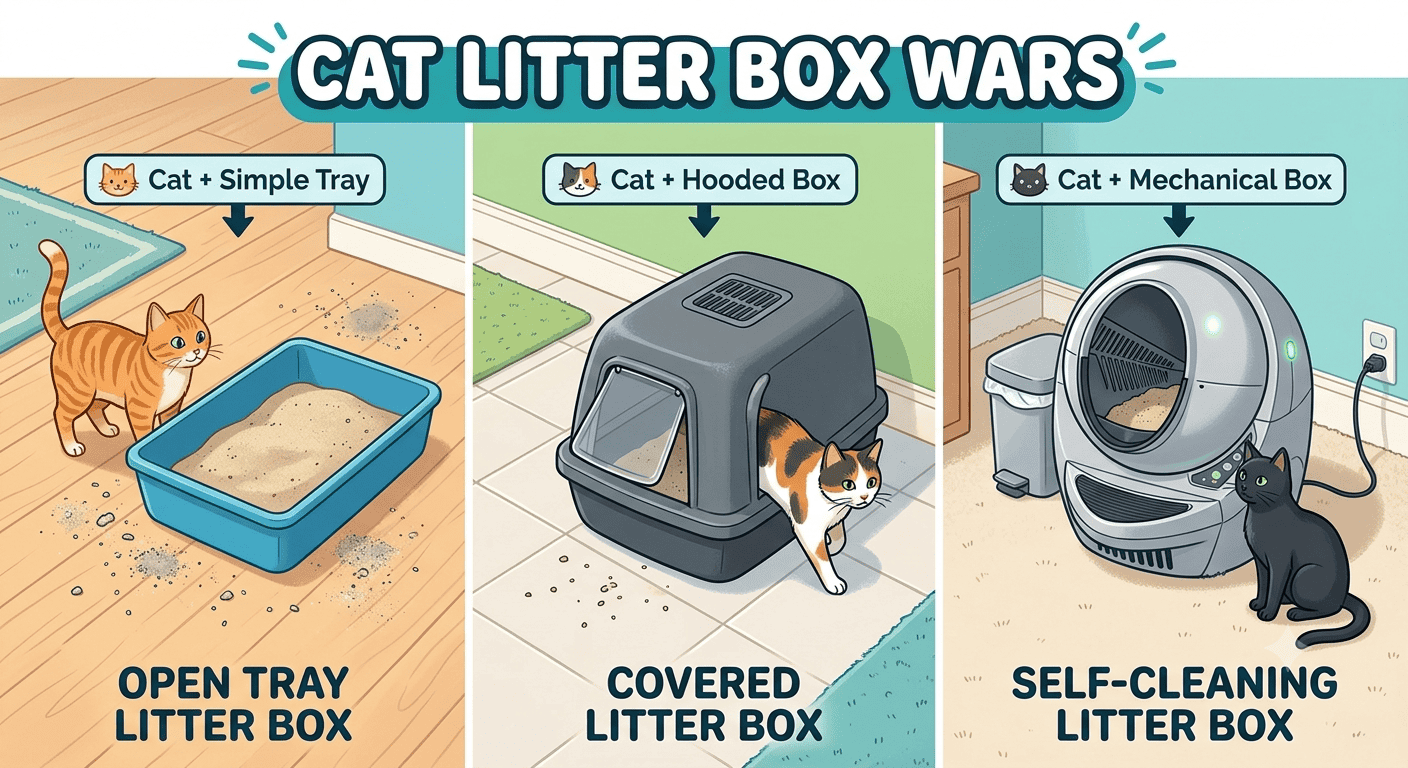
1. Open tray litter box
This is the simplest option and often the easiest for cats to accept. It is basic, affordable, and simple to scoop. If your cat is new, fussy, or easily stressed, an open tray is often the least intimidating choice.
The downside is smell and mess. Open trays do not hide anything, so odour control depends heavily on how often you scoop and what litter you use. They also leave more litter scatter around the floor, especially if your cat likes to dig like it is mining for treasure.
Best for: Cats that dislike enclosed spaces, and owners who want easy access and simple cleaning.
Pros: Cheap, easy to clean, cat-friendly.
Cons: Less odour control, more visible mess.
2. Covered litter box
This type adds a hood or enclosure for privacy and some odour containment. It can help keep litter scatter down and make the area look neater. For owners who do not want the box completely out in the open, this is often the middle-ground choice.
The catch is that some cats hate enclosed spaces. If the opening feels too small or the inside stays too humid, the cat may avoid it. Covered boxes can also trap smell inside, which sounds good in theory but may just mean you notice the problem later.
Best for: Homes that want a cleaner look and a bit more odour control.
Pros: Better containment, more privacy, less scatter.
Cons: Can trap smell, may annoy some cats, more awkward to clean.
3. Self-cleaning litter box
This is the premium convenience option. The idea is simple: less scooping, less daily effort, more hands-off maintenance. If it works well, it can save time and reduce the amount of unpleasant work you deal with.
But this is also the type most likely to cost a lot and require regular upkeep anyway. Sensors, moving parts, waste bins, and app features all sound great until something jams, the cat refuses to use it, or you realise you still need to clean the machine. It can be a smart buy for the right household, but it is not automatically the easiest option.
Best for: Busy owners who want convenience and are willing to maintain the system.
Pros: Less manual scooping, convenient, often more hygienic-feeling.
Cons: Expensive, more parts to maintain, not every cat accepts it.
What to look for before buying
Size matters more than people think. Your cat should be able to turn around comfortably without feeling boxed in. Entry height also matters, especially for kittens, older cats, or cats with mobility issues.
Cleaning access is the next big thing. A litter box that is hard to wash will become a problem fast. Odour control is useful, but it should not come at the cost of your cat refusing to use the box. The best litter box is the one your cat actually likes and you can live with daily.
Best pick for most homes
For most cats, the open tray litter box is the safest starting point because it is simple and usually well accepted. If you want a neater look and a bit more containment, the covered litter box is the better middle ground. The self-cleaning litter box is best only if you truly value convenience and are prepared for the higher cost and maintenance.
If I had to choose one for a typical home, I would start with a covered box only if the cat already likes enclosed spaces. Otherwise, an open tray is often the least stressful and most reliable choice.
Verdict
A litter box should make life easier, not become a fancy problem. A lot of pet products look impressive until you realise the cat has the final say. The best choice is usually the one that keeps your cat happy, your floor cleaner, and your nose less offended.
FAQ
Do cats prefer open or covered litter boxes?
Many cats prefer open trays because they feel less trapped, but some are fine with covered ones.
Are self-cleaning litter boxes worth it?
They can be, if you want convenience and do not mind the higher price and upkeep.
How often should I clean a litter box?
Scoop daily if possible, and deep-clean regularly to keep smell under control.
What is the safest choice for a new cat owner?
An open tray is usually the easiest and most reliable option.