
A good dog bed is one of those buys that sounds simple until you start comparing options and suddenly every bed claims to be the best thing since sliced bread. Your dog needs comfort, you need something that lasts, and both of you want a bed that does not become a stained lump after a few months. That is where the real test begins.
The truth is, different dogs need different beds. A younger dog that loves curling up may want something very different from an older dog that needs more joint support, and a hot-climate dog may want a bed that does not trap heat. So instead of looking for the “best” dog bed in general, it makes more sense to compare the types that actually solve different problems.
Why bed type matters
Dogs spend a lot of time resting, so the bed is not just decoration. It affects support, temperature, and how easily your pet settles down. A poor bed can flatten quickly, overheat your dog, or become a pain to clean.
For affiliate content, dog beds are strong because they combine emotional buying and practical buying. Owners want their pet to be comfy, but they also want something washable, durable, and worth the money. That makes this a very search-friendly topic with clear potential for comparison.
The 3 dog bed types compared
1. Orthopaedic dog bed
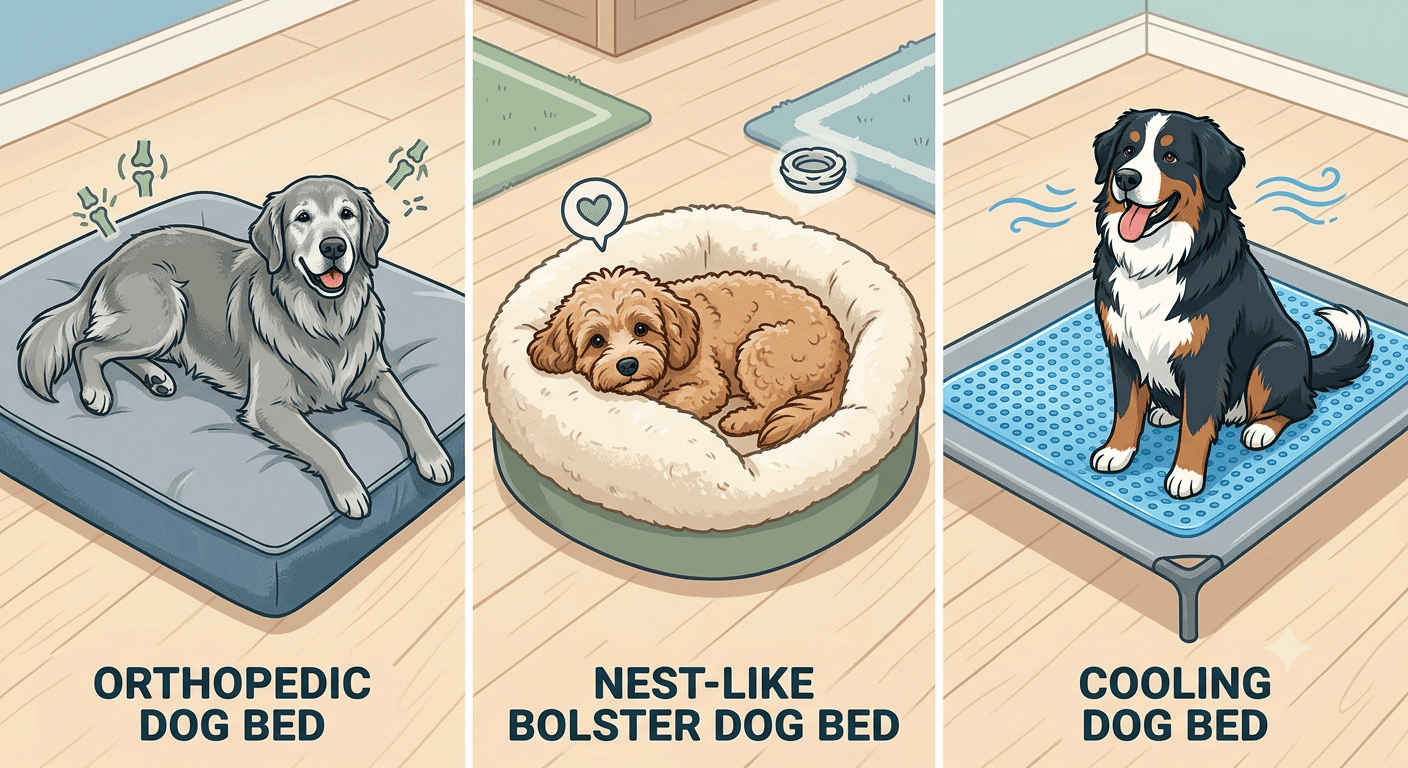
This bed is built for support. It usually uses thicker foam and is designed to help with joints, hips, and overall comfort. For older dogs, bigger dogs, or dogs that seem stiff after naps, this type often makes the most sense.
The downside is that quality matters a lot. A cheap orthopaedic bed may look supportive but flatten too quickly. It can also take up more space and cost more than a basic bed.
Best for: Older dogs, larger breeds, and dogs that need extra support.
Pros: Better cushioning, good joint support, often durable.
Cons: More expensive, can be bulky, quality varies.
2. Bolster dog bed
This is the cosy, nest-like option. The raised edges let dogs rest their heads or curl up against the sides. It is a strong choice for dogs that like feeling enclosed and secure while sleeping.
The main limitation is size and structure. If the bed is too soft or too small, your dog may outgrow it quickly or flatten the sides. It is comfort-first, but you still need enough support for it to hold up over time.
Best for: Dogs that like to curl up or rest against edges.
Pros: Comfortable, cosy, reassuring for anxious dogs.
Cons: Can flatten, may not suit larger dogs, less support than orthopedic beds.
3. Cooling dog bed
This type is designed to help with heat. It is especially useful in warmer climates, for dogs that overheat easily, or for pets with thick coats. If your dog sprawls on the floor instead of using a fluffy bed, this may be why.
The trade-off is comfort style. Cooling beds can feel firmer and less plush than other options. They are practical, but they may not be the favourite of dogs who love soft nesting spots.
Best for: Hot weather, thick-coated dogs, and dogs that run warm.
Pros: Better airflow, helps with heat, practical for warm homes.
Cons: Less plush, may not feel cosy enough for all dogs.
What to check before buying
First, size. Your dog should be able to lie down fully without hanging off the edge. Second, washable covers matter a lot because dogs do not exactly keep bedding pristine. Third, think about your dog’s age and sleeping style.
If your dog is older or has joint issues, support matters more than looks. If your dog runs warm, cooling may matter more than softness. If your dog likes to curl up and sleep snugly, the bolster bed may be the one they use most happily.
Best pick for most homes
For general comfort and support, the orthopedic dog bed is often the strongest all-round choice. It gives better structure and tends to work well for many dogs, especially as they age. If your dog loves snuggling into corners, the bolster bed may be a better emotional fit, while the cooling bed is the practical choice for hot climates.
If I had to pick one for the average dog owner, I would lean toward the orthopedic bed because it is the most broadly useful. But if your dog clearly likes sleeping curled up, the bolster bed may win in real life even if it looks less premium on paper.
Verdict
The best dog bed is not the one with the fanciest marketing copy. It is the one your dog actually uses, and that still looks decent after repeated washing. Comfort, durability, and easy cleaning beat trendy features every time.
FAQ
What type of dog bed is best for older dogs?
Usually an orthopaedic bed, because it offers more support.
Are bolster beds good for anxious dogs?
Yes, many dogs like the snug, enclosed feeling.
Do cooling beds really help?
They can, especially in warm weather or for dogs that overheat easily.
What is the most practical bed for most owners?